

The global upheaval seen in critical raw material (CRM) supply chains in 2025 has been over a decade in the making.
After years of systematically building a dominant position as the world's leading refiner of critical raw materials, the first real indication that China intended to use its control over CRMs as a geopolitical weapon came in 2010, when Beijing temporarily blocked the export of rare earth minerals to Japan following an incident between a Chinese fishing vessel and the Japanese coast guard off the Senkaku Islands. Beijing's willingness to weaponize rare earths in this dispute served as a wake-up call to governments concerned about the national security implications of China's control over critical raw materials, as well as to organizations that rely on these materials for their manufacturing processes and products.
Yet despite tentative efforts by some developed countries in subsequent years to diversify their CRM supply chains, China has retained its overwhelming advantage. According to the International Energy Agency's (IEA) 2025 "Global Critical Minerals Outlook" report, China is the leading refiner for 19 of 20 strategic minerals, with an average market share of 70%. China accounted for 60% of global mining output of rare earths used in industrial magnets in 2024. It is even more dominant in the separation and refining stages, accounting for approximately 91% of global production. Similarly, in the manufacturing of permanent magnets used in automobiles, industrial motors, data centers and defense, China has increased its share from 50% two decades ago to 94% today.
This year, these concerns escalated into a full-blown crisis. In April, Beijing responded to U.S. President Donald Trump's imposition of tariffs by announcing export bans on seven rare earth elements, causing manufacturing and technology industries across the world to scramble for supplies amidst the ensuing shortages. In October, China ratcheted up the pressure further by announcing curbs on five additional elements as well as an extraterritorial licensing regime governing the use of Chinese materials and technologies. Later that month, as part of a larger trade agreement with the United States, China subsequently agreed to pause implementation of its rare earth export regime introduced on Oct. 9. Regardless, Beijing's overt weaponization of its CRM dominance will serve as a long-term catalyst for the creation of new supply chains outside of China.
With the United States, European Union, Australia and other developed countries racing to establish more resilient supply chains, organizations are trying to ascertain what this newly fragmented risk landscape will look like. Which countries will participate in these new supply chains and which CRMs will each provide? How long will it take before they are commercially viable? What new legal and compliance risks will need to be considered? Will there be geopolitical retaliation as organizations diversify their risk?
Adding another layer of risk: a wave of resource nationalism in developing countries has further complicated the current and future CRM supply chain picture. In an effort to retain more of the economic benefits from their raw materials, an increasing number of countries in Asia and Africa have enacted plans to ban the export of specific raw materials in favor of building up their own processing and refining capacity and selling higher-value-added materials and products.
To assist organizations in framing this wide-ranging set of geopolitical, compliance and supply chain risks, our analysts examine four key areas:
This latest Network Intelligence Report represents countless hours of research and analysis by RANE's analyst team. We hope you find it to be a useful and thought-provoking guide to the myriad risks inherent in the emerging global realignment of CRM supply chains.
Jim Busch, Director of Risk Intelligence
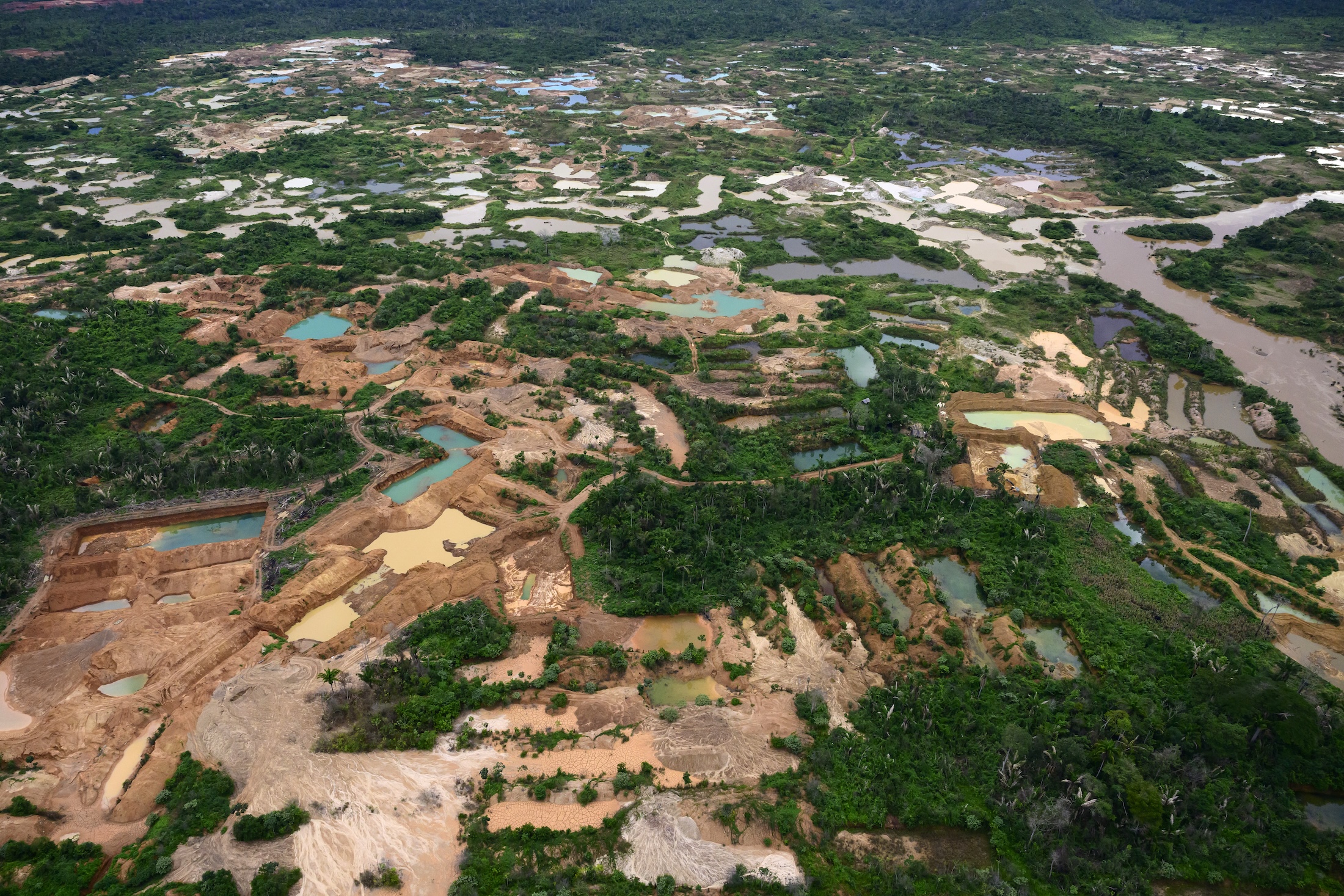
(PABLO PORCIUNCULA/AFP via Getty Images)
Monitoring the availability of critical raw materials (CRMs) and evaluating supply chain security has increasingly become a priority for organizations in a wide array of sectors. As nearly every industry becomes digitized and reliant on electronics and computers for their operations and AI is being increasingly incorporated across all sectors, demand is growing for products from sectors like electronics, telecommunications and green technology, the operations of which are most vulnerable to disruptions to CRM supply chains.
This means that while the electronic and semiconductor, green technology, transportation and aerospace sectors are most reliant on CRMs, nearly all other industries also rely on products from at least one of these sectors, causing chokepoints in CRM supply chains to have ripple effects across the broader economy. To help understand these risks, RANE spoke to Dr. Rebecca Keller Friedman, Director at Adamantine Energy and Founder and Head of Analysis at GeopoliTech Analysis and Advisory, as well as to RANE Asia-Pacific Analyst Chase Blazek and RANE Sub-Saharan Africa Analyst Remi Dodd.
The world's ability to produce rare earths, cobalt, silicon, magnesium and other inputs depends not only on mining them, but on refining them — a stage of the supply chain that has become alarmingly concentrated, geopolitically exposed and vulnerable to disruption. Through decades of state-led industrial policy, strategic acquisitions and technological investment, China has secured overwhelming control over processing for a number of key CRMs.
While China does not possess the majority of the world's reserves or mining capacity of all of these materials, its investment in refining capabilities has nonetheless enabled it to gain a strategic hold on a crucial part of the supply chain for numerous CRMs. As such, Friedman tells RANE that "China remains the biggest refining chokepoint in raw materials." Friedman says that this is partly because the refining process has so much potential for environmental damage. She says that "no one wants industrial processes in their backyard because of the quality of life factor and the potential for environmental damage." For global companies, this means that China offers established infrastructure, scale and cost efficiency, but at the cost of exposure to policy risk.
Blazek says that the main risk of Chinese dominance of CRMs is "from economic coercion driven by geopolitical tensions." He elaborates to say that "China has long wielded export and import curbs to punish its foreign partners for political, diplomatic, or trade developments, but in the last decade China's geopolitical tensions with the West have risen dramatically, resulting in a similar uptick in China's use of economic coercion, including curbs on CRM flows.
For instance, in 2023, China announced new controls on germanium and gallium, of which it controls 94% and 99% of processing, respectively and which hold importance for semiconductors, solar panels and electric vehicles (EVs). Because germanium and gallium are not directly mined and rather produced as a byproduct of processing zinc and bauxite, supply is limited for both of these materials and disruptions, like export controls and licensing requirements, prompt sharp price increases and growing challenges for reliant industries.
Chinese export controls on CRMs can impact a wide array of industries ranging from manufacturing to technology and energy, with Friedman noting, for example, that for electrical vehicle battery materials "many of the processing components are located in China." Friedman says China's approach is "notable because it seeks to control every aspect of the value chain." Indicating this risk, China has periodically issued export restrictions on graphite anode materials which are used in batteries, with export controls tightened in December 2024 and again on Oct. 9, 2025 as part of a broader announcement of export rules for rare earths.

Underscoring China's increased willingness to leverage its dominance in both heavy rare earth elements and light rare earth elements, known collectively as rare earth elements, China's Ministry of Commerce on Oct. 9 expanded its rare earths export controls by releasing licensing requirements for exports by Chinese domestic entities of rare earth processing technologies and for overseas exports, including by foreign companies, for which Chinese rare earths comprise at least 0.1% of the value. In China-U.S. trade talks which occurred in South Korea on Oct. 30, however, China subsequently agreed to suspend such rules for a year.
This development is an expansion of a rollout of its licensing requirements for rare earths from China in April, which occurred in retaliation for U.S. President Donald Trump's hefty tariffs on the country and caused shortages globally before a series of deals with the United States and the European Union mitigated the impacts. The Oct. 9 announcement highlights how rare earths in particular have become an issue of concern in recent months amid an escalating trade war between the United States and China.
Blazek states that "China is primarily weaponizing rare earth exports via flexible and potentially quite restrictive export licensing regimes. These allow Chinese authorities to monitor export destinations, end use and global supply chains so that in the event they need to use export curbs (e.g. following U.S. restrictions), China can do so rapidly and effectively." Blazek also notes that these export curbs are the "primary point of leverage China has over the United States and Europe in its current trade disputes," and that, going forward, these types of curbs will "remain China's most likely form of retaliation in the event that President Trump raises tariffs, expands tech restrictions on China, or the two simply fail to make progress in trade negotiations over the next several months."
However, the current frequency of rare earth export curbs is not necessarily indicative of the norm, with Blazek noting that China is unlikely to continue to issue such restrictions at the same cadence following the end of Trump's term. Nonetheless, in the long term, Blazek says that "China is motivated to stop supporting U.S. military supply chains, given Beijing views China as locked in a decades-long power struggle with the United States, including military power over the fate of Taiwan. Thus, some degree of Chinese CRM export curbs and Western efforts to diversify supplies away from China will continue no matter who succeeds Trump in the White House."
Nonetheless, in the short term, concerns are more pressing. Friedman tells us, "there is no short-term replacement," and that even if there are efforts to diversify, "it's not an instant switch." Even beyond China, Friedman tells RANE that "when [companies are] moving [toward suppliers in] Southeast Asia, it can still be under Chinese control and [they are] seeing other restrictions based on that." Friedman says this is because, in response to U.S. and Western efforts to diversify their CRM supply chains and seek alternative suppliers in Southeast Asia, Chinese companies also moved facilities there.
For example, a February report from U.S. nonprofit security organization C4DS found that three-quarters of Indonesia's current nickel refining capacity is controlled by Chinese companies, with such plants dependent on foreign investment. Blazek echoes Friedman's sentiment, noting that "China's dominance of global rare earth processing... gives Western governments few avenues of recourse when China imposes rare earth curbs, as Western construction and legal constraints mean new rare earth refining capacity takes years to spin up." Friedman elaborates to say, "there may be alternatives, but you can't just build a refining plant out of nowhere, especially in the developed world where you need permitting and approvals."
While Chinese dominance in raw materials refining represents the most significant potential bottleneck for CRM supply chains, organizations should remain mindful of other chokepoints at different stages in the supply chain, such as mining. The concentration of mining in just a handful of countries for some materials creates an additional layer of vulnerability as geopolitical events, regulatory developments or natural disasters in just one area can have an outsized impact on the entire supply chain. Moreover, some raw materials are produced as a byproduct of the production of or extracted from another material, such as tantalum (extracted from coltan), cobalt (commonly produced as a byproduct of copper production) and neon (a byproduct of steel manufacturing), tying these materials' supply chains to risk factors impacting different raw materials. This means that shocks to one area where both materials are produced could become amplified and impact multiple supply chains. As such, areas where mining of certain materials is highly concentrated, such as the Democratic Republic of the Congo, South Africa, Russia and Indonesia, represent key areas to monitor.
Additionally, a majority of CRMs are transported by sea, meaning that supply chains are also vulnerable to maritime chokepoints, with even short-term disruptions having the potential to result in higher prices of raw materials and end products. For example, in 2021, the Suez Canal was blocked for six days after a container ship ran aground in the canal, causing significant shipping delays and global supply chain disruptions, underscoring how similar incidents in the future in strategic trade routes could impact CRM supply chains.
The Democratic Republic of the Congo
The Democratic Republic of the Congo is a crucial player in global mineral supply chains and holds vast deposits of a number of key minerals including coltan and tantalum, copper and cobalt, manganese, tin and tungsten. Dodd states that the Democratic Republic of the Congo is particularly important as it provides "the majority of global supply for coltan, from which tantalum is extracted, and cobalt."
The Democratic Republic of the Congo's role as a key source for several critical raw materials is shaped by various risk factors including ongoing conflict and competition from rebel groups, as well as humanitarian concerns. Tin, tantalum, tungsten and gold mined in the Democratic Republic of the Congo are at times referred to as conflict minerals, with concerns over their role in fueling armed groups and violence in the region. These minerals, which are largely used for electronics, link the Democratic Republic of the Congo's mineral wealth to ongoing conflict, human rights abuses and the funding of militias that control mines and smuggling routes. In addition to supply chain disruptions from ongoing conflict and instability, potential import bans or growing regulations on conflict minerals that are largely concentrated in the Democratic Republic of the Congo, like tantalum, have resulted in greater compliance burdens for supply chain due diligence on responsible sourcing and increased costs for organizations.
The security situation varies in different parts of the country, with some parts more vulnerable to conflict that could disrupt global supply chains. Thus, mining in some regions of the Democratic Republic of the Congo is more stable than in others, with tantalum and tin mining in the North Kivu region particularly vulnerable to disruption from conflict. Dodd says that "Fighting in the eastern Democratic Republic of the Congo, where the bulk of the country's coltan deposits are found, has periodically resulted in disruption to tantalum supply as well as price volatility."
While most conflict is concentrated in the eastern North and South Kivu provinces, there have also previously been security concerns and localized clashes in the southern Katanga region, which produces around 73% of the world's cobalt and where most copper mining in the Democratic Republic of the Congo occurs. Moreover, Dodd assesses that "the government's recent imposition of cobalt export quotas will curb global cobalt supply and add upward pressure on prices." This, in conjunction with China controlling nearly 80% of refining for cobalt, means that multiple aspects of cobalt's supply chain could serve as potential problem areas.
South Africa
South Africa represents another potential chokepoint, particularly for platinum group metals (PGMs), which are critical for applications like catalytic converters and hydrogen fuel cells. Dodd notes that "South Africa accounts for over 75% of known global reserves of PGMs, which include platinum, palladium and rhodium among others." Concentration of PGMs in South Africa has historically led to shortages, with power crisis, labor unrest, infrastructure degradation and changes in demands for these materials likely to shape risk factors going forward. Dodd specifies how prior shifts in the market will impact production of PGMs in the country, saying that "Platinum miners have suffered from lower platinum prices in the first half of the 2020s amid concerns about future demand for internal combustion engines, prompting many to curb their capital expenditure. While these moves put miners' operations on a sounder financial footing in the short term, they will limit South Africa's ability to leverage the recent increase in platinum prices by constraining miners' ability to ramp up production."
Indonesia
Indonesia in recent years has sought to evolve its value chain for raw materials to focus more on processing, with its resource nationalism becoming increasingly consequential for global supply chains. The country possesses a significant global share of the supply of raw materials like nickel, tin, copper, coal and bauxite, with its exports historically relying on these natural resources. However, it has minimal processing capacity and is seeking to capitalize on its possession of natural resources to bolster economic gains and create new jobs by developing domestic refining and manufacturing to add value to commodities and attract foreign investment.
As part of these efforts, Indonesia has periodically issued export controls on its key resources. For example, Indonesia, the world's largest nickel producer, banned exports of raw nickel ore in 2020 to force investment in domestic refining and downstream manufacturing. Following this policy, supply has been unable to keep up with demand stemming from the growth of EV production and Indonesia is currently facing a shortage of nickel ore for its refining capacity due to lengthy delays of mining approvals amid heightened demand. In the future, Indonesia could also implement export bans on certain nickel-containing intermediate goods which would further limit global supply, particularly as nickel mining and processing is concentrated in only a handful of regions aside from Indonesia, including Russia, the Philippines and New Caledonia.
Tin is also concentrated in only a handful of countries, including Indonesia, China and Myanmar, all of which pose supply-chain risks. While production in Myanmar represents a heightened risk due to the country's civil war, Indonesia and China largely pose risks due to environmental concerns and Indonesia's growing resource nationalism. Indicating how environmental regulations can impact supplies particularly when exports are highly concentrated, in 2016, the second-largest smelter in Indonesia ceased operations and Indonesia cut exports due to environmental policies, contributing to higher tin prices. Officials in recent years have also discussed expanding the country's 2014 ban on tin ore exports as part of its strategy to move up the value chain, which could result in higher global prices as supply is restricted.
Russia
Russia's 2022 invasion of Ukraine prompted supply chain disruptions and price increases in several key materials. Of these, nickel, titanium and palladium are the most significant that are officially considered CRMs. For nickel, disruptions from the conflict, Western sanctions on Russia and growing domestic demand for Russian military applications all contributed to a decline in Western sourcing of nickel from Russia and a spike in nickel prices from other suppliers (of which there are few).
Similarly, following the outbreak of the Russia-Ukraine war, global titanium prices surged by approximately 90% over supply concerns and increased demand for titanium from alternative sources. While titanium prices show signs of stabilization, prices remain higher than they were prior to the invasion. Finally, in the case of palladium, Russia is the world's largest producer of palladium, accounting for 44% of global palladium production in 2023 followed by South Africa and Zimbabwe. Since 2022, Russia's war in Ukraine and electricity shortages in South Africa have contributed to an ongoing supply deficit.
Official CRM lists typically focus on physical raw materials, but the role of key materials that are used in industrial processes across a range of sectors are often overlooked. Disruptions to these materials' supply are also major points of vulnerability capable of causing delays and shortages further down the supply chain. These materials include gases like neon, argon and boron and other chemicals that are largely produced as byproducts and therefore not as frequently included, despite the key role they play in production due to their use for industrial processes. Neon, argon and boron all play crucial roles in producing semiconductors, such as for lasers that etch patterns onto silicon wafers, doping (a technique which helps manipulate and control electrical properties) and buffers keeping environments inert to protect from unwanted chemical reactions.
One of these materials, neon, is at high risk of potential disruption to its production, as indicated with disruptions that occurred in 2022 and 2023 following the outbreak of the Russia-Ukraine war. Neon is produced through fractional distillation of liquid air, with only large air-separation units able to achieve this, which has hindered efforts to diversify its production. This means that as a result of the Soviet Union's massive steel industry, Russia and Ukraine possess the right type of infrastructure necessary for neon production with large air-separation units and are the leading suppliers of the global neon industry, with Ukraine accounting for 50% of global production of semiconductor-grade neon and Russia 30% prior to the outbreak of the war. After the outbreak of the war, neon prices rose by over 600%. While efforts to diversify supplies away from Ukraine and Russia have grown since the 2014 annexation of Crimea and the 2022 Ukraine war, the two remain significant suppliers, leaving supply chains vulnerable.
About the Expert
Dr. Rebecca Keller Friedman is Director at Adamantine Energy and Founder and Head of Analysis at GeopoliTech Analysis and Advisory. She has spent more than a decade gaining expertise at the intersection of disruptive technology and geopolitics, including tenure as Director of Analysis at RANE from 2020-2022. She holds a B.A. from Washington University in Chemistry and Biochemistry and a Ph.D from Colorado State University in Organic Chemistry. She conducted her Post-Doctoral Fellowship at the University of Colorado at Boulder.


