
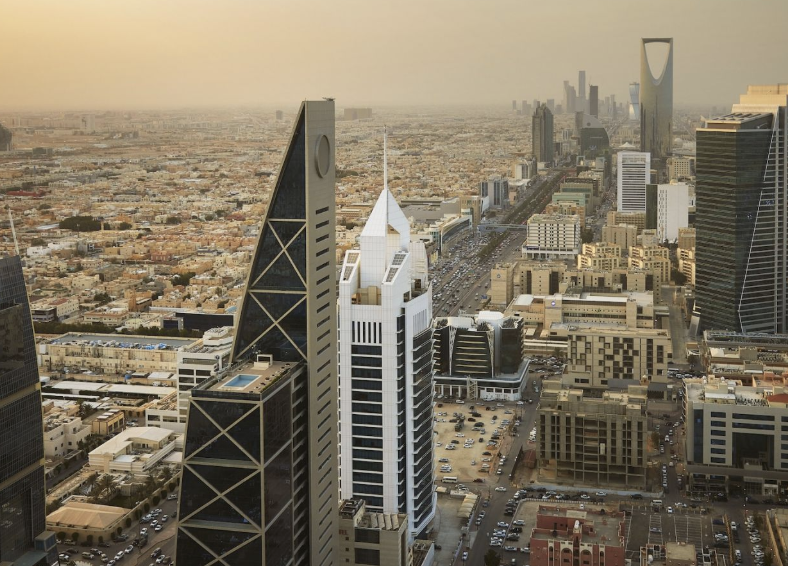
Historically, Saudi Arabia, rich in oil but poor in water, was a neglected borderland. Its harsh interior made civilization difficult, and coastal regions were controlled by empires. But oil and the post-WWII order transformed it into a minor power.
In geopolitics, powers are categorized as superpowers, great powers, middle powers, minor powers, and borderlands. In the 20th century, Saudi Arabia, historically a borderland, used oil and diplomacy to become a minor power, navigating relations with Turkey, Iran, Israel and Egypt. Its leaders now aim to become a middle power, strong enough to deter neighbors and maintain its political system.
However, its national strategy is challenged by its austere past and potential future. Saudi Arabia seeks alignment with a regional and global order to achieve middle power status while preventing internal divisions spurred by the very reforms it is using to walk that path. This delicate balance is unprecedented in the Middle East. The kingdom is vulnerable to geopolitical shocks and internal erosion of consensus, especially the latter. Riyadh's monarchy must manage these imperatives effectively to avoid a return to a divided, foreign-controlled state, mirroring its 20th-century beginning.
The vast Arabian Peninsula, dominated by Saudi Arabia, is a hot desert. Until the 1920s, no state fully controlled it due to extreme heat (up to 120 degrees Fahrenheit) and minimal rain (Riyadh gets 3-4 inches per year). There are no rivers or lakes, and underground water is hard to access. Monsoons only affect small areas in the south and east. Rain causes unpredictable floods before quickly vanishing. Reservoirs are impractical in the heat.
Despite this, human civilizations evolved differently in each region. The Gulf coast is lethally humid due to hot Persian Gulf surface temperatures and poor circulation. The Gulf, with limited fish and only one outlet (Strait of Hormuz), leads to stifling humidity and hot fog, making agriculture difficult. However, the Gulf itself provided life for fishing and trading villages, allowing them to subsist on fish and dates and trade pearls with other civilizations. Westward, the Najd plateau, home to Riyadh, avoids the Gulf's humidity but remains hot and water-scarce. It's a land of nomads and raiders, a borderland that unexpectedly became the Saudi state's heart. The Hejaz, along the Red Sea, is comparatively an oasis. The Red Sea's better circulation brings more rain and eases summers. Mountains trap moisture and block heat from the Najd, aiding aquifer recharge. Though still a hot desert, it supports permanent settlements, with parts of the highlands in Asir even having temperate climates and forests.
Historically, these zones shaped power dynamics. The Gulf coast was often loosely controlled by imperial naval powers (except during the early Islamic caliphate). The Najd interior, home to unconquered raiders, was largely ignored. The Hejaz, with its settled communities, attracted land powers like the Romans and Turks due to its trade routes (leading to Yemen) and later, its holy status as Islam's birthplace.
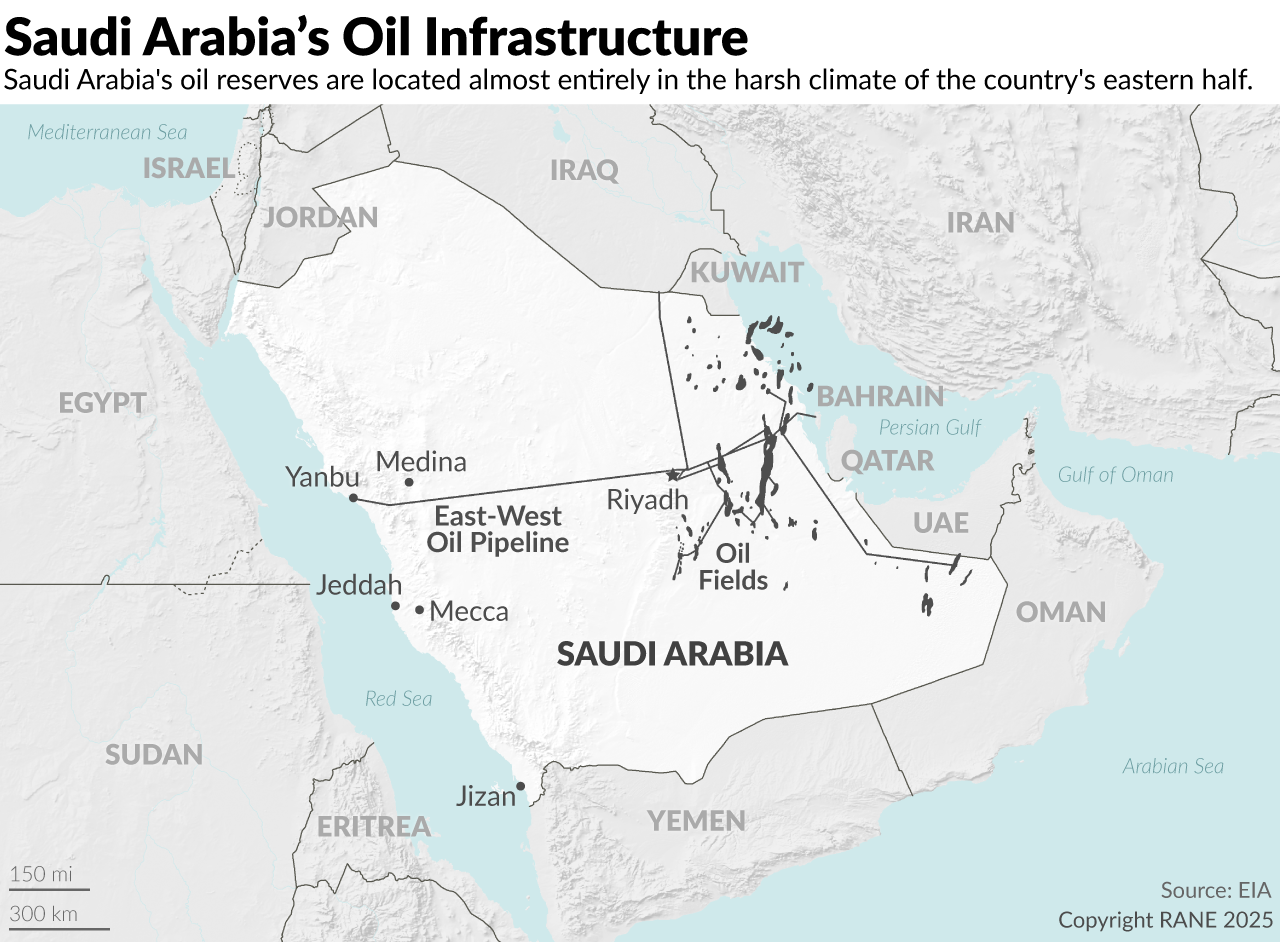
While deserts defined Arabia for millennia, a unique geographical twist led to the discovery of vast, high-quality, sweet light crude oil beneath the sands, mainly east of Riyadh. This oil, useless for most of history, became Arabia's most valuable commodity in the 20th century and the backbone of the modern Saudi state.
The rise of Islam in the 7th century CE drastically changed this. The Prophet Muhammad united Najd and Hejaz tribes, forming a powerful raiding force that exploited the weakening Persian and Byzantine empires. From 632-750 CE, Arab raiders established an empire stretching from China to Spain, with Medina briefly serving as its capital. However, the rapidly expanding ''rightly-guided'' caliphates soon faced internal conflict, leading to the capital shifting north to Damascus by the 650s, ending Arabia's short period as a superpower. Despite this, the Hejaz transformed into a holy region, attracting sustained interest from great powers. Control of Mecca and Medina provided religious legitimacy and income from pilgrim taxes.
Centuries later, in 1517, the Ottoman Turks took control of the Hejaz for its holy legitimacy and pilgrim income. Meanwhile, in Arabia's interior, the Al Saud tribe formed a crucial alliance with Islamic fundamentalist Sheikh Mohammed Ibn Abdul-Wahhab in 1744. This alliance, based on Wahhabi ideology, gave the Al Saud a unique advantage by revitalizing Islam and placing them at the top of the religious hierarchy, inspiring a more resilient fighting force. Wahhabism also served as a political glue, deterring tribal defections. However, it exacerbated Sunni-Shi'a divides and didn't match European nation-state innovations. The Al Saud family used Wahhab's ideology and their leadership to establish the First Saudi State that same year, taking Mecca from the Ottomans decades later in 1803. This was a weak state, and the Ottomans, distracted by other conflicts, eventually reconquered the Hejaz and defeated the Saudis by 1818.
The Second Saudi State began in 1824. This time, rulers avoided confrontation with the Ottomans, focusing on internal tribal conflicts and areas where Ottoman interests were limited. They also avoided conflict with Great Britain, which was securing trade routes to India with naval stations and tribal alliances in the Persian Gulf. This strategy prevented another disastrous foreign invasion but also limited the Saudis' ability to generate income, population base, or natural resources. By the 1890s, internal infighting led to the collapse of the Second Saudi State in 1891.
Saudi history appeared trapped in a cycle of unification and collapse until two pivotal events: World War I and the discovery of oil.
When the Ottoman Empire joined World War I in 1914, Arabia became a British-Ottoman frontier. The British allied with groups like Ibn Saud, who focused on local rivals while maintaining British ties. As Ottoman power declined, the British recognized Ibn Saud as ruler of Najd, while the Hashemites, closer British allies, received the Hejaz. Initially, Ibn Saud's power was limited to deserts and oases, with the Hejaz being the strategic center. But in 1925, Ibn Saud captured Mecca from the Hashemites. London, preoccupied with other revolts, tolerated this, as Mecca was not crucial to British trade. However, Ibn Saud's fervent Wahhabi warriors, the Ikhwan, sought to attack British holdings to establish a global caliphate. Ibn Saud, recognizing British military superiority, demurred. He instead launched a campaign against the Ikhwan, subordinating Wahhabism to the state. In 1932, Ibn Saud declared the formation of the first Saudi kingdom, named after his family, omitting the religious establishment's role.
While unifying Arabia, Ibn Saud met with oil surveyors, with American wildcatters discovering oil in 1938, though World War II delayed exploration. Wahhabism unified the state, and oil revenue allowed for technological imports. Aware of the need for protection, Ibn Saud sought a foreign sponsor, finding it in the non-imperial United States. His 1945 meeting with President Roosevelt solidified this partnership, giving the U.S. regional access to oil through Aramco. After Ibn Saud's death in 1952, his successors faced new challenges: Soviet-backed communism, the end of European empires by 1971, and the widespread backlash from the 1948 establishment of Israel.
The defeat in Palestine shocked many Arabs, who blamed their governments and kings for failing to secure victory against Israel. Some, like Egypt's Gamal Abdel Nasser, advocated for pan-Arab nationalism, believing a powerful Arab state (Egypt, in his view) could unite the region and destroy Israel. Others, like the Muslim Brotherhood, promoted pan-Islamism, a call for a unified Islamic state to defeat Israel and expel European influence. A smaller group of anti-imperialist socialists and communists also emerged, some aligned with the Soviet Union. Few supported the existing political order, which was seen as a failure.
These ideologies directly threatened the regional order, leading to the fall of several monarchies: Egypt (1952), Iraq (1958), North Yemen (1962), Libya (1969), and Iran (1979). Surviving monarchies, including those in the Gulf Arab states, Morocco, and Jordan, felt insecure.
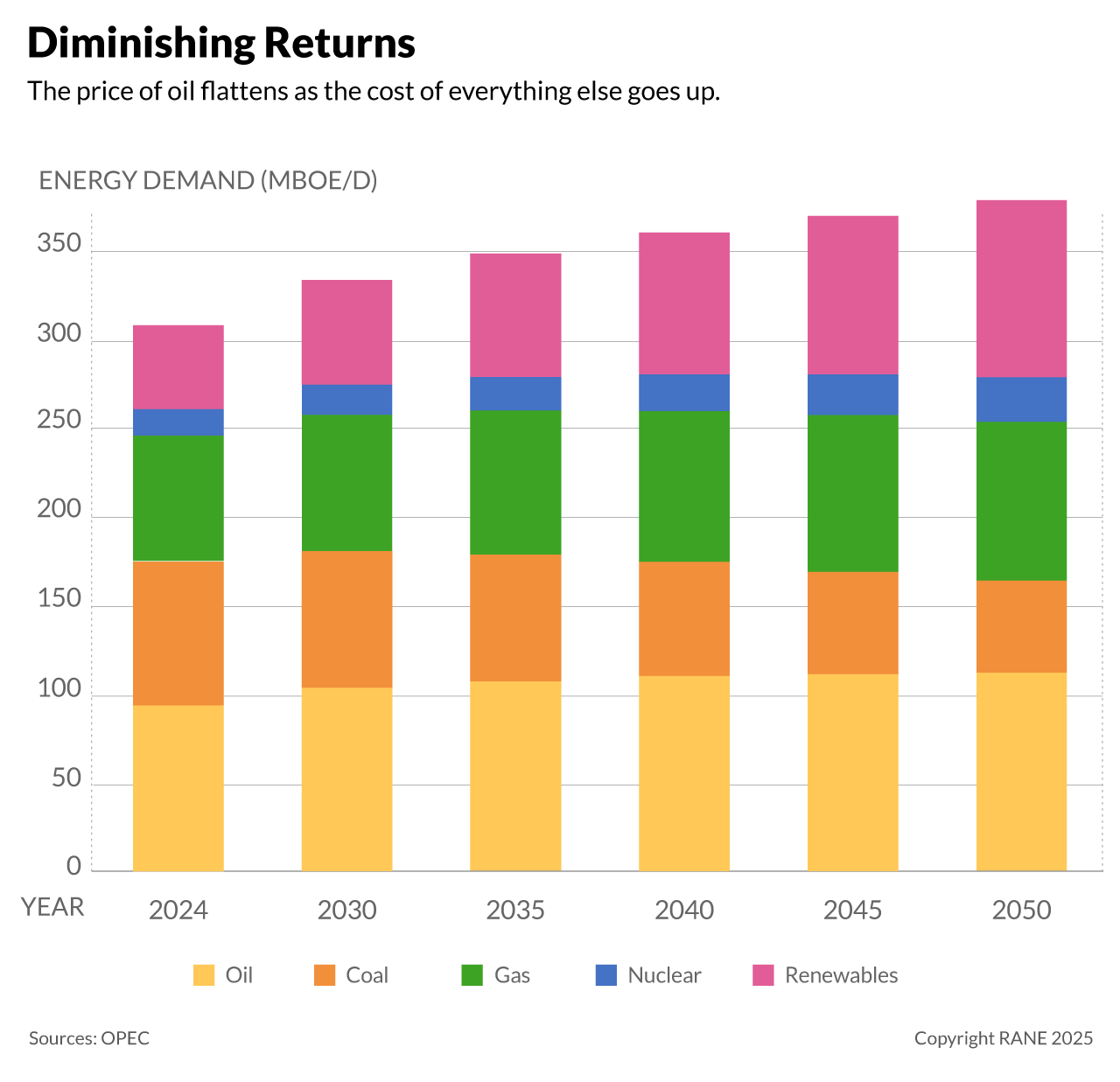
Saudi Arabia, fearing Soviet influence and pan-Arab nationalism, allied with the US in the 1950s. The US, valuing Saudi Arabia's oil, offered defense and technology. This partnership deepened after Britain's 1971 withdrawal. The relationship was tested by US ties to Israel and the 1973-74 oil embargo. The embargo, though damaging to the West, backfired, preventing future similar actions. It also spurred US efforts toward energy independence. Saudi Arabia then pursued a strategy of maintaining oil prices high enough for profit but low enough to prevent the rise of alternative energy.
The Saudi-U.S. relationship evolved to stabilize oil markets despite various crises. Saudi Arabia consistently aided in maintaining oil supply and price stability, even during periods of market flooding to gain share, understanding that U.S. consumer benefit outweighed harm to U.S. producers. The ''oil weapon'' was never again used against the U.S.
Domestically, Saudi Arabia faced growing political strain as new technologies challenged the Wahhabi-Saudi social contract. This led to the 1979 Siege of Mecca, where Islamists, inspired by the Iranian Revolution, attacked the holy city. The Al Saud responded by strengthening ties with the Wahhabi establishment and externalizing the fundamentalist threat. They appeased some fundamentalists by sending them abroad to establish Saudi-style institutions. The Soviet invasion of Afghanistan in 1979 offered a solution, allowing Riyadh to send troublesome young activists, including Osama bin Laden, to fight, thus addressing domestic radicalism while aligning with U.S. goals against Soviet expansionism.
For a time, this formula worked. Activists and militants could go abroad, either to schools and mosques or the Afghan battlefields, rather than stirring up trouble at home. There were no more echoes of the Siege of Mecca. Iran's repeated calls for Saudis to rise up and join their Islamic revolution may have stirred hearts, but not action. Overall, both at home and abroad, Saudi Arabia settled into a stable conservatism, married to oil as the glue of its social contract, content to leave social mores largely in the 1960s or before, and unwilling to take risks abroad. The Americans could, and did, take risks in the region, including bombing Iran's navy during the Iran-Iraq war in retaliation for attacks in the Persian Gulf, and intervening in Lebanon in the 1980s. The Saudis could let the United States absorb all these risks, enjoying their placid status as a pro-American, if non-interventionist, power.
In the 1980s, the Cold War defined the Middle East's geopolitical landscape, limiting regional actors' autonomy. However, the superpowers' less intense focus on the region compared to Europe and Asia allowed local agency, seen in events like the Iranian Revolution and Arab-Israeli wars. Saudi Arabia navigated these changes by forming shifting alliances, backing Saddam Hussein's Iraq while opposing Hafez Assad's Syria, and supporting Palestinians politically but not actively during the First Intifada. Despite its oil wealth, Saudi Arabia remained a fragile minor power, a reality dramatically exposed by Iraq's 1991 invasion of Kuwait.
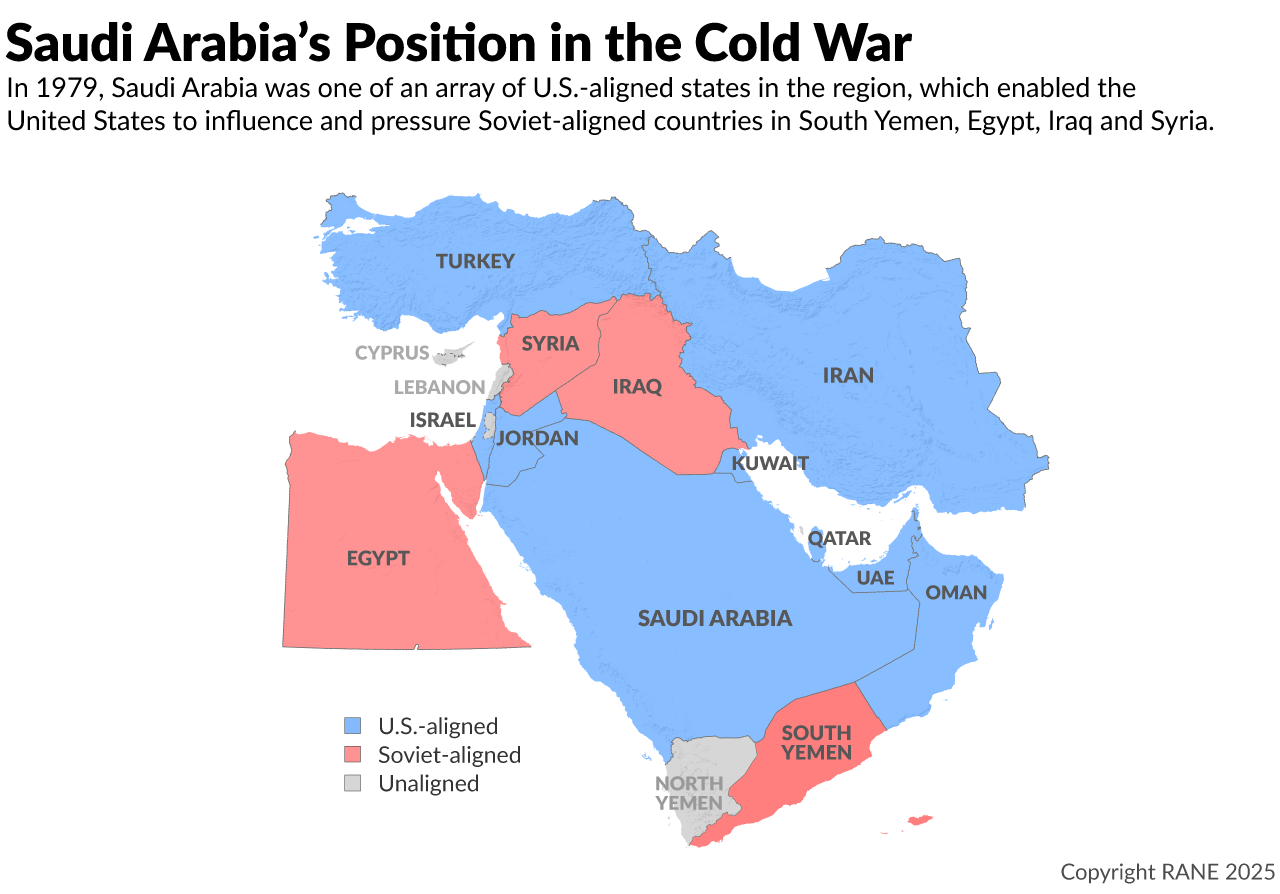
Kuwait, an oil-rich monarchy, was invaded by Iraq in 1990 after misjudging Saddam Hussein's aggression and failed negotiations. The invasion shocked the Arab Gulf, which saw Saddam as a protector. The United States intervened, liberating Kuwait six months later. During this time, the Soviet Union collapsed, silencing Moscow as the United States crushed Iraq's Soviet-style army, marking the beginning of a unipolar world.
Saudi Arabia, a minor power, benefited from this era, aligning with the United States against rivals Iran and Iraq. The United States, convinced of its moral duty to spread democracy, pressured Saudi Arabia, leading to municipal elections in 2005. However, 9/11 solidified Saudi fears that democracy would empower radicals like al-Qaeda. They also opposed the 2003 Iraq invasion, fearing a power vacuum.
The United States' actions led some Saudis to believe their interests were no longer fully aligned. The neighboring United Arab Emirates demonstrated a new economic model in which monarchies could retain power through foreign labor and improved living standards, without necessitating political liberalization. King Abdullah (2005-15) remained cautious, fearing rapid reform would incite conservative violence, a fear reinforced by al-Qaeda and ISIS.
King Abdullah's death in 2015 was a turning point. The Arab Spring and Iraq War empowered Iran and radical groups. The United States achieved energy independence through fracking and President Obama sought to de-escalate tensions with Iran, alarming the Saudis. Generational change was also a factor, as the sons of Ibn Saud were aging out.
King Salman, taking power in 2015, recognized the need for change. He broke tradition by appointing his son, Mohammed bin Salman, as crown prince in 2017. This shift prioritized vision and transformation over lineage, aiming to make Saudi Arabia a middle power with geopolitical agency.
Crown Prince Mohammed bin Salman, known commonly as MbS, and Saudi reformers aimed to transform Saudi Arabia into a resilient, influential middle power, like Iran or Turkey, by overcoming traditional constraints and implementing radical new policies across its economy, social structures, and military. This transformation, however, would preserve the absolute rule of the Al Saud family.
This vision materialized as Vision 2030, an ambitious plan to diversify Saudi Arabia's economy beyond oil, mimicking Dubai's success as a hub for finance, trade, and tourism. While Saudi Arabia was not facing an immediate oil shortage, it recognized the future risk of declining global oil demand. The plan sought to reduce reliance on oil for national wealth by 2030, a monumental task given decades of social and economic conservatism. Challenges included outdated institutions, strict social rules (e.g., women unable to drive, active religious police), stagnant media, and a struggling military.
To enact these changes, MbS suppressed political opposition through arrests and crackdowns, elevating loyalists. The 2017 Ritz Carlton crackdown saw Saudi elites briefly detained. The 2018 assassination of journalist Jamal Khashoggi, a critic of MbS, caused a brief crisis with the United States. But these assertive moves broke conservative consensus, unleashing social changes under the guise of Vision 2030.
The religious police were curbed, women gained driving and travel rights, and Saudi Arabia opened up to foreign tourists and businesses, even considering normalization with Israel. These changes aimed to reduce reliance on the Wahhabi establishment and empower younger reformers. The social reforms largely succeeded, avoiding major protests and transforming cities.
MbS also sought to assert Saudi Arabia's regional influence. Seeing a U.S. retrenchment, Saudi Arabia intervened in Yemen against Iranian-backed Houthis and briefly abducted Lebanon's Prime Minister Saad Hariri to counter Hezbollah. MbS also pushed the United States to abandon the Iran nuclear deal and blockaded Qatar to curb its support for Islamist movements. However, unlike his domestic pushes, these foreign policy moves were largely unsuccessful. The Yemen intervention stalled, Qatar's blockade failed due to U.S. and Turkish support, and the Lebanon gambit failed. The anti-Iran campaign only inspired a backlash from Tehran, leading to a direct attack on Saudi Aramco at Abqaiq in 2019. After Abqaiq, MbS realized the United States would no longer be an expansive security guarantor, and that Riyadh was on its own earlier than he had expected.
While social and economic reforms progressed, foreign policy initiatives stalled or increased risks, threatening domestic reforms. In 2020, Riyadh also engaged in a brief oil price war with Russia amidst the COVID-19 pandemic. These events marked MbS's last major assertive foreign policy actions. Saudi Arabia then shifted away from risky policies, ending the Qatar blockade in 2021, negotiating a Yemen exit in 2022, and rebuilding ties with Iran via Chinese mediation in 2023.
By then, Saudi Arabia had largely returned to its pre-MbS foreign policy status quo. This approach informed its response to the 2023 Gaza War and the 2025 Israel-Iran war. Though Saudi Arabia opposed Hamas, it remained neutral due to fears of pro-Palestinian domestic backlash and Houthi attacks. Similarly, during the Israel-Iran war, Riyadh maintained strict neutrality despite past hints of supporting action against Iran's nuclear program. This neutrality paid off, as Iran attacked a U.S. base in Qatar instead of Saudi Arabia, and Houthis refrained from attacking Saudi Arabia despite its ties with the United States and subtle connections with Israel. Meanwhile, walking its regional tightrope, Saudi Arabia also resisted U.S. pressure to normalize relations with Israel.
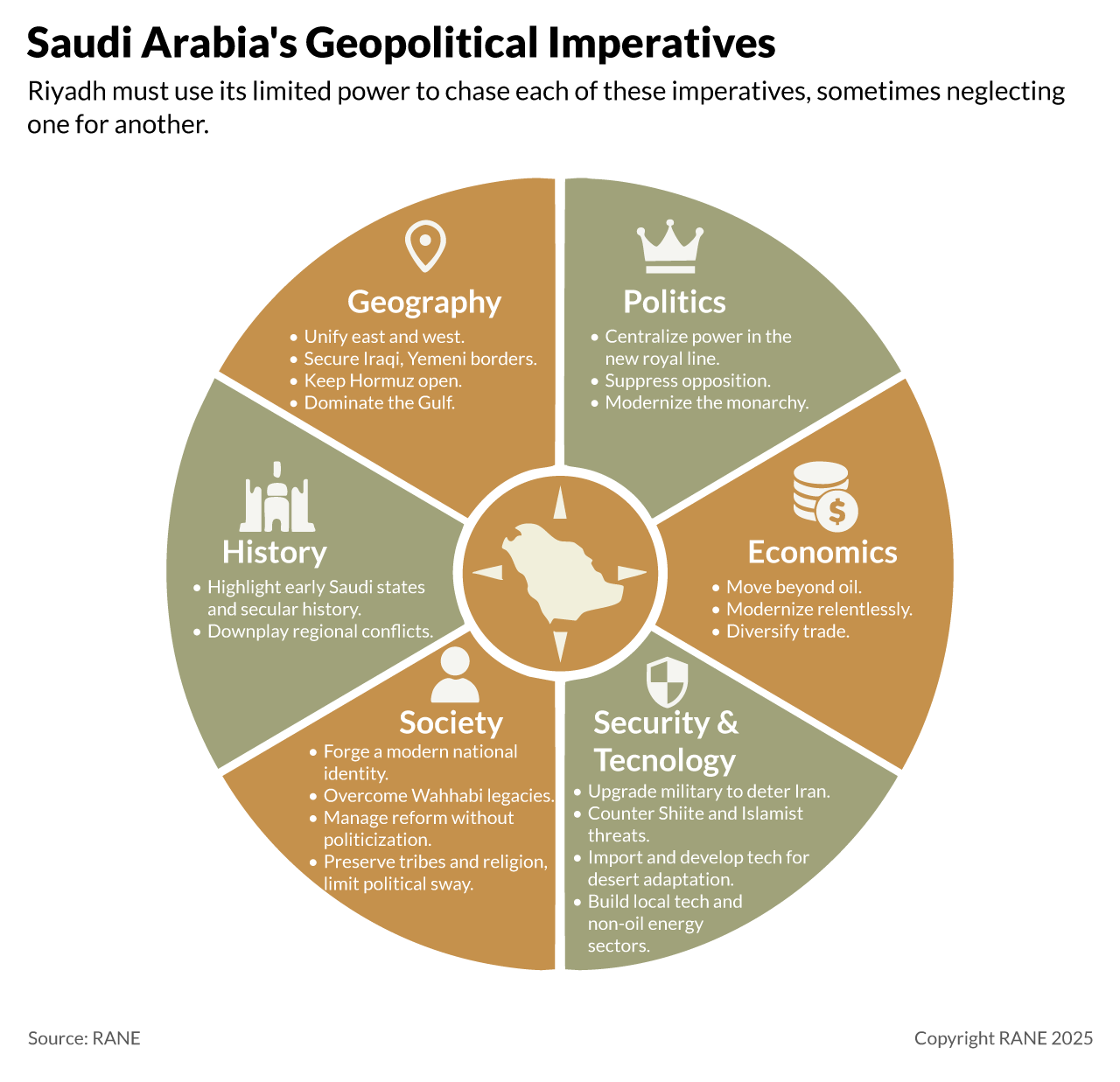
Saudi Arabia's Modern Imperatives
With its foreign policy adventurism behind it, Saudi Arabia's national goals for the 2020s, leading up to Vision 2030, prioritize solidifying social changes and accelerating economic transformation. Foreign policy has become secondary, with Riyadh adopting a ''Saudi First'' approach that emphasizes domestic strategy and a non-confrontational foreign policy due to its inability to go it alone. This shift is evident in Saudi Arabia abandoning its expansive goals in Yemen, instead maintaining a truce with the Houthis despite Israeli and U.S. attacks on the group. Riyadh has also mended ties with Qatar, diverged from its anti-Muslim Brotherhood stance by building pragmatic relations with Turkey, and ceased lobbying efforts against U.S. bases to avoid alienating the U.S. political establishment. In 2023, with Chinese mediation, Saudi Arabia signed a detente with Iran, making regional neutrality central to its foreign policy. This paid off during the Israel-Iran war when Qatar, not Saudi Arabia, faced Iranian retaliation. Regarding Israel and Palestine, Saudi Arabia has returned to traditional neutrality. While previously open to normalization with Israel, Hamas's Oct. 7, 2023, attacks and Israel's response convinced Riyadh to avoid normalization and mediation. This stance protects needed U.S. support for Vision 2030 while preventing public backlash from normalizing relations with Israel.
Domestically, social change has slowed, with minor liberalizations quickly reversed if unpopular. The government aims to enable Saudis to digest past changes and form a new consensus. Economically, Vision 2030 remains largely on track. The ''Saudization'' program has reduced Saudi unemployment to 6.3% by Q1 2025, down from double digits only a few years earlier, and non-oil GDP reached 50% of the economy in 2023, seven years ahead of schedule. However, foreign direct investment and educational outcomes continue to lag, and some mega-projects are being abandoned. Post-Khasshogi, crackdowns on activists have prevented the formation of a civil society that could challenge the monarchy. King Salman, at 87 years old, remains in power, but 40-year-old Crown Prince Mohammed bin Salman effectively runs the kingdom and is expected to rule consistently for decades.
While the economy will diversify, the monarchy remains reliant on oil to maintain control. It seeks to transition to a new social contract where citizens pay taxes and serve the state in exchange for economic growth and improved living standards. A new national identity, strongly tied to the royal family, is also being cultivated to limit dissent, which can otherwise be suppressed by force.
This approach has fundamental flaws: taxation without representation is a classic formula for unrest, and while nationalism is growing, it may not remain attached to the monarchy. Policies harming the shared nation could trigger backlash. Aware of these risks, the monarchy will likely use the welfare state as a last-resort stabilizer, offering largesse to regain loyalty during dissent. This, while financially sustainable due to oil income and sovereign wealth, will reinforce inefficiencies and hinder the development of a sustainable non-rentier economy, blocking middle power status.
Another obstacle is Saudi Arabia's rapidly falling fertility rate, portending a demographic crunch. A lack of young, dynamic workers will further impede middle power aspirations and burden the country with a Millennial cohort expecting government support despite working in the private sector.
External factors could derail Saudi Arabia's progress as well. A faster-than-anticipated drop in energy demand (due to hydrogen fuels, EVs, or wars affecting customers) could force austerity, leading to unrest. Increased borrowing could impact credit ratings, and lenders might impose non-financial conditions. Broader geopolitical shifts, such as a U.S.-China war, regional conflicts (Israel-Iran) or resurgent militant groups, could interrupt Saudi Arabia's stability. While Riyadh will prioritize domestic stability, its political economy's resilience to such pressures is uncertain.
Therefore, by 2045, Saudi Arabia will likely still be pursuing middle power status, largely treading water despite decades of effort.
If middle power status remains elusive, Saudi Arabia will be a minor power vulnerable to regional rivals and reliant on a great power patron. However, by 2045, the U.S. presence in the Middle East will have diminished, shifting to a transactional relationship. Saudi Arabia will need to manage its defense through regional partners (like Turkey, Egypt and Iran) and extra-regional ones (like Pakistan), avoiding blocs and leveraging its location and energy reserves for security. The kingdom will have multiple, evolving security relationships, but none as enduring as its previous one with the United States.
These new alliances will expose Saudi Arabia to more direct competition and heightened insecurity, exacerbated by an incomplete economic transformation. In a sustained conflict with a regional middle power (likely Iran or Turkey), Riyadh would be at a disadvantage. It would rely on concessions, coalitions and oil diplomacy for regional security, but its incompletely reformed military, lacking a professional officer class and traditions, would struggle in direct clashes. This would deter aggression, leading Saudi Arabia to seek defense pacts. However, without direct U.S. defense, Riyadh might be forced to submit to hostile demands or risk humiliating defeat.
Saudi Arabia has historically navigated tumultuous regional and international events, relying on neutrality, American support or oil reserves to maintain stability. This baseline is expected to continue, but alternatives exist.
One alternative is political reform, evolving towards a more resilient, decentralized nation-state. This could involve elected councils and public input, making citizens more loyal to the nation than just the monarchy. A reformed political economy, perhaps modeled after Kuwait's democracy, would better withstand external pressures, geopolitical shocks and war.
The second, less likely alternative is a shift towards authoritarianism or totalitarianism. Facing internal weaknesses, the monarchy would increasingly use force to maintain power, prioritizing its primacy over living standards. This would create a large police state, hypernationalism and deep societal divisions, trapping Saudi Arabia as a minor power reliant on a patron, prone to stagnation and unrest.
While these extreme scenarios are less probable, they remain possibilities in the 2040s. Meanwhile, Saudi Arabia will continue to balance tradition and evolution, prioritizing domestic stability to ensure the viability of its system.


